

Écrire, ce que cela signifie pour moi?
What does writing mean to me?
Chaque mot que j’écris donne un but à ceux qui le précèdent et m’oblige à trouver le meilleur mot suivant qui contribuera à l’accomplissement du sens total de l’idée que j’avais en tête, mon objectif étant que cette idée ne se révélera qu’avec les derniers mots de chaque histoire que mon imagination me supplie de vous offrir.
Every word I write gives a purpose to those preceding it and requires me to find the best next word that will contribute to the accomplishment of the total meaning of the idea I had in mind, my goal being that the idea will only reveal itself with the last words of every story my imagination begs me to offer to you.
Un jardin aquatique au Québec

Un 'Jardin aquatique au Québec' a été le premier livre que j'ai écrit et a été publié par la maison d'édition Éditions Du Trécarré. On y décrit comment concevoir, construire et entretenir un jardin aquatique, ainsi que comment y cultiver ses plantes et y maintenir ses poissons. Malheureusement, il n'est plus disponible. Pendant plusieurs années, j'ai enseigné en horticulture des jardins aquatiques aux instituts de technologie agricole de Saint-Hyacinthe et de La Pocatière, ainsi qu'au Jardin botanique de Montréal. Un des grands projets auxquels j'ai contribué a été le jardin d'eau du Bois de Coulonge de Québec, à l'étape de la sélection de son emplacement, en tenant compte de la nappe phréatique et des anciens ruisseaux cachés, ainsi qu'à la préparation du devis technique.
-------
Un 'Jardin aquatique au Québec' was the first book I wrote and was published by the publishing house Éditions Du Trécarré. It describes how to design, build, and maintain a water garden, as well as how to cultivate plants and to grow and maintain fish. Unfortunately, it is no longer available. For several years, I taught water garden horticulture at the institutes of agricultural technology in Saint-Hyacinthe and La Pocatière, as well as at the Montreal Botanical Garden. One of the major projects to which I contributed was the water garden of the Bois de Coulonge in Quebec, during the selection of its location, taking into account the groundwater and the old hidden streams, as well as the preparation of the technical specifications.
My novel 'My Ripper Hunting Days
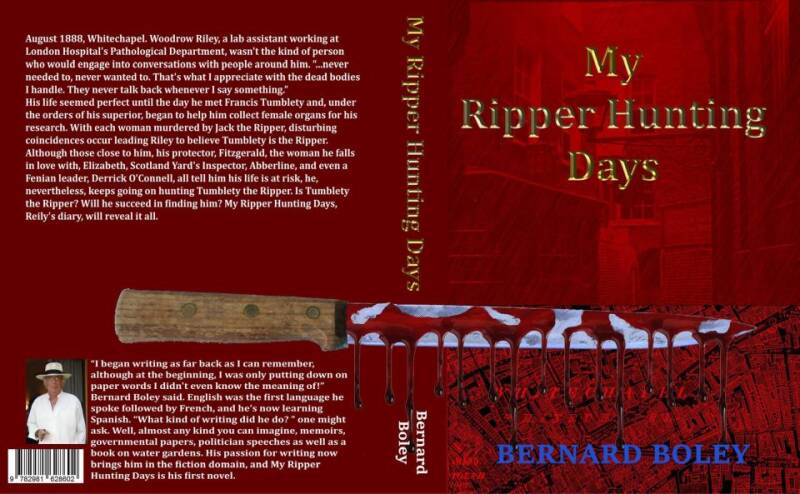
Durant plusieurs nuits, un rêve me revenait avec une scène se déroulant dans un café-bar, dans laquelle un homme observait un client assis à une table. Il prenait des notes qui me semblaient consister en des descriptions de femmes qu’il ne cessait de mirer avec un regard assez louche. L’homme s’adressa à lui en lui disant : ‘Je sais ce que vous êtes’. La seule façon que j'ai trouvée de mettre fin à ce rêve a été de me lever pour le transcrire dans mon carnet de notes que je gardais toujours à mes côtés. Plus je lisais mes notes, plus j’en suis arrivé à la conclusion que l’homme qui regardait les femmes était sans doute une sorte de prédateur dangereux, me donnant le goût d’écrire quelque chose à partir de mon rêve. En cherchant qui pouvait être le prédateur, j’ai constaté que Jack l’Éventreur serait le meilleur «candidat». Le reste fait partie de l’histoire de l’écriture de trois versions de ce roman, ce qui m’imposait des recherches historiques et une familiarisation avec la langue anglaise de l’époque. Tout ce temps passé à étudier Jack l'Éventreur a fait en sorte que j'ai acquis un certain savoir au point d'avoir été invité à la conférence internationale de Jack the Ripper tenue à Baltimore en 2018 pour présenter mon analyse des suspects de ces meurtres. J’ai déposé mon analyse sur le site Web Academia sous le titre 'Baltimore RipCon presentation - Francis Tumblety'. Le but de cet article était d’offrir aux personnes intéressées par les suspects de Jack l’Éventreur une vision neutre et non biaisée de qui Francis Tumblety était réellement, sur la base des preuves disponibles, ainsi que de la manière appropriée selon laquelle un suspect de Jack l’Éventreur devrait être examiné.
L’histoire se déroule un peu comme ceci : Lorsque j’avais 14-15 ans, j’ai trouvé le journal intime bien conservé d’un jeune homme, Woodrow Reily, qui travaillait à l’hôpital de Londres et était retenu à la station de quarantaine de Grosse-Isle près de Québec, ayant attrapé le typhus en traversant l’Atlantique. Il a écrit comment il a rencontré un homme nommé Francis Tumblety, un véritable suspect de Jack l’Éventreur, et s’est lié d’amitié avec lui, mais peu après, il a été convaincu que cet homme était Jack l’Éventreur. Plus il rassemble des preuves, plus il croit que les meurtres de l’East End ne sont peut-être que des pièces d’un puzzle plus grand dans lequel Tumblety semble jouer un rôle important. Va-t-il avoir une vue d’ensemble et capturer Tumblety l’Éventreur ? Chassait-il vraiment Tumblety, l’Éventreur ou quelqu’un de son passé, un passé sombre qu’il nie même avoir traversé ? Vous le saurez une fois que vous aurez acquis une copie du journal publié par Reily sur Amazon, 'My Ripper Hunting Days'. En voici davantage sur ce roman. Des commentaires sur mon roman peuvent être lus à la page 'Témoignages et critiques'.
-------
For several nights, a dream came back to me with a scene taking place in a café-bar, in which a man was watching a customer sitting at a table. He took notes that seemed to me to consist of descriptions of women whom he kept staring at with a rather suspicious look. The man addressed him, saying: “I know what you are.” The only way I found to end this dream was to get up and transcribe it in my notebook that I always kept by my side. The more I read my notes, the more I came to the conclusion that the man who looked at women was undoubtedly a kind of dangerous predator, making me want to write something from my dream. While searching for who the predator could be, I found that Jack the Ripper would be the best "candidate". The rest is part of the writing history of three versions of this novel, which required me to do historical research and become familiar with the English language of the time. All this time spent studying Jack the Ripper has made me acquire such a degree of knowledge to the point of being invited to the international Jack the Ripper conference held in Baltimore in 2018 to present my analysis of the suspects in these murders. I uploaded my paper on the Academia website under the title 'Baltimore RipCon presentation website - Francis Tumblety'. The purpose of this paper was to offer those interested in Jack the Ripper suspects a neutral, non-biased view of who Francis Tumblety actually was, based on the available evidence, as well as the appropriate manner by which a Ripper suspect should be examined.
The story goes a bit like this: When I was 14-15 years old, I found a well-preserved diary of a young man, Woodrow Reily, who worked at the London Hospital and was held at the Grosse-Isle quarantine station near Quebec City, having caught typhus while crossing the Atlantic. He wrote how he met a man named Francis Tumblety, an actual Jack the Ripper suspect, and befriended him, but soon after became convinced this man was Jack the Ripper. The more evidence he gathers, the more he believes the East End murders may only be pieces of a larger puzzle in which Tumblety seems to be playing an important part. Will he get the whole picture and capture Tumblety the Ripper? Was he really hunting Tumblety, the Ripper or someone from his past, a dark past he even denies having gone through? You shall find out once you grab a copy of Reily's published diary on Amazon, 'My Ripper Hunting Days'. Here's more about it. Comments on my novel can be read on the 'Témoignages et critiques' page.
My first short story, 'An unexpected encounter'
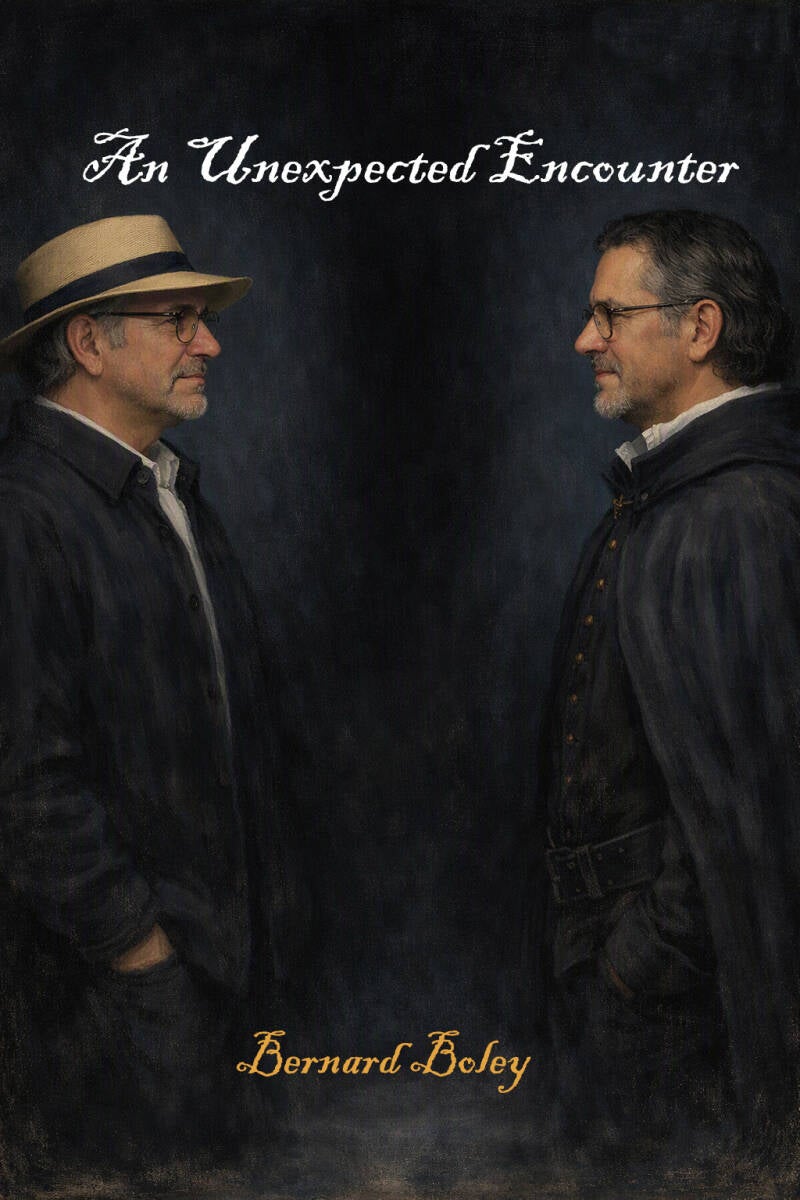
La première nouvelle que j’ai écrite était, en fait, un devoir que ma professeure d’espagnol m’a donné après avoir pris plaisir à lire mon roman, ‘My Ripper Hunting Days’. Ce qui compliquait les choses, c’est que non seulement il devait être beaucoup plus court que mon roman, mais que j’ai dû l’écrire en espagnol. Quel défi ! Ensuite, je l’ai traduit en français et en anglais. Son titre est ‘The legend of the man from somewhere over there’.
La voici. Il y a quelques années, je suis allé faire des achats à Mérida, comme je le faisais souvent. Au moment où je suis sorti de mon taxi, je me suis retrouvé environ trois cents ans en arrière. Si vous pensez, comme moi, que c’était impossible, vous feriez mieux de lire l’histoire pour découvrir ce qui pourrait sembler plus qu’impossible.
-------
The first short story I wrote was, in fact, a homework assignment that my Spanish teacher gave me after she enjoyed reading my novel, ‘My Ripper Hunting Days’. What complicated things were that it not only had to be much shorter than my novel, but I also had to write it in Spanish. In Spanish! Short! In a week only! What a challenge! Then, I translated it into French and English. Its title is ‘The legend of the man from somewhere over there’.
This is what it's about. A few years ago, I went shopping in Merida, as I often did. The moment I got out of the cab, I found myself some three hundred years in the past. If you think, as I did, that was impossible, you'd better read the story to discover what might seem more than impossible.
'The legend of the man from somewhere over there'.

Cette histoire est assez spéciale. En fait, je n'avais trouvé que le titre. J'aimais ce titre parce qu'il comportait une contradiction. Comment peut-on parler d'un personnage légendaire dont la seule chose que l'on sait de lui est qu'il vit quelque part là-bas? Lorsqu'on parle de personnages légendaires, il s'agit de personnages connus tels qu'Hercule. Dans le cas du mien, qui est-il, qu'est-ce qu'il a fait pour être légendaire, où est-il? Personne ne le sait. Il fallait donc que j'écrive une histoire et cette histoire est la recherche de l'inconnu. Mon personnage parcourt l'univers pour découvrir cet inconnu légendaire et ce qui lui est révélé, c'est que cet inconnu est l'amour. Ce qui est le plus particulier dans l'histoire, c'est que le personnage légendaire n'a jamais rien fait pour se faire connaître. C'est une femme qui a parcouru peut-être des milliers de kilomètres à travers le temps et l'espace pour trouver son partenaire. L'amour est né lorsqu'ils se sont rencontrés. C'est alors qu'il s'est levé et a suivi celle qui lui a fait découvrir sa raison d'être. En fait, c'est ce qui s'est produit lorsque j'ai rencontré la femme de ma vie il y a de cela presque cinquante ans.
-------
This story is quite special. In fact, I had only found the title. I liked this title because it contained a contradiction. How can we talk about a legendary character whose only thing we know about him is that he lives somewhere over there? When we talk about legendary characters, it is about well-known characters such as Hercules. In the case of my legendary character, who is he, what did he do to be legendary, where is he? No one knows. So I had to write a story, and this story is the search for the unknown. My character travels the universe to discover this legendary stranger, and what is revealed to him is that this stranger is love. What is most peculiar in the story is that the legendary character never did anything to make himself known. It was rather a woman who had traveled perhaps thousands of miles through time and space to find her partner. Love was born when they met. That’s when he stood up and followed the one who made him discover his purpose. Actually, this is what happened when I met the woman of my life almost fifty years ago.
A horror story turning into a Christmas story, 'Til it happens in your heart'

Lorsque des historiens et des écrivains, dont moi, partagent sur des forums de discussion d'experts pendant de nombreuses années le même intérêt à l'endroit d'un criminel célèbre tel que Jack l'Éventreur, il se crée entre eux une sorte d'étrange amitié. Voici un exemple de ce que cela a donné. Un peu avant le temps des fêtes de Noël, il y a de cela plusieurs années, l'un d'eux proposa aux écrivains d'écrire un conte d'horreur des fêtes. Même si les histoires d'horreur n'ont jamais été ma tasse de thé, j'ai accepté de relever le défi. Toutefois, plus je mettais des mots sur le papier, moins le récit me plaisait. J'ai donc décidé d'écrire un conte de Noël traditionnel.
Le récit est assez simple. Christian, un dirigeant d'entreprise qui avait l'habitude d'organiser une activité des fêtes pour des enfants, se voit obligé d'aller au pôle Nord pour rencontrer Sintermann, le grand patron de la compagnie, sans savoir pour quelle raison. Il ne l'avait jamais rencontré ni même vu une photo de lui. Qui plus est, alors qu'il n'a jamais eu besoin d'adjoints par le passé, il se voit imposer une adjointe qu'il ne connaissait pas pour l'accompagner, celle-ci n'ayant même pas travaillé pour l'entreprise. Un double conflit s'installe entre lui, l'adjointe et son patron. Comment cela va se terminer, me demandez-vous? Il vous faudra lire l'histoire.
-------
When historians and writers, including me, share the same interest in a notorious criminal like Jack the Ripper on expert discussion forums for many years, a strange friendship develops between them. Here is an example of what happened. A little before the time of Christmas, several years ago, one of them suggested to us writers to write a horror story about the holidays. Even though horror stories have never been my cup of tea, I accepted the challenge. However, the more words I put on paper, the less I liked the story. So I decided to write a traditional Christmas tale.
The story is quite simple. Christian, a company executive who used to organize a holiday activity for children, is forced to go to the North Pole to meet Sintermann, the big boss of the company, without knowing why. He had never met him or even seen a photo of him. Moreover, while he had never needed assistants in the past, he was forced to hire an assistant whom he did not know to accompany him, as she had not even worked for the company. A double conflict arises between him, the assistant, and his boss. How will this end, you ask me? You’ll have to read the story.
Maya gods, really? 'There goes Paul...'

Vivant depuis plus de 15 ans à Mérida, la plus grande ville de l’État du Yucatan, je ne pouvais pas deviner l’influence que le passé Maya, les croyances spirituelles, la culture et les connaissances avancées en astronomie de cette civilisation ancienne auraient sur les thèmes et les intrigues de mes histoires. Plus je parlais espagnol avec mes voisins, plus je me suis rendu compte que beaucoup de vieux mots mayas faisaient partie de leur vocabulaire quotidien. Cette nouvelle n’est qu’une des nombreuses que j’ai écrites dans lesquelles le Maya avait quelque chose que je devais couvrir.
Dans celle-ci, un touriste suit un homme nommé Chuck, qui l’a invité à visiter un village maya inconnu. Visiterait-il réellement le site promis ? Qui sait?
-------
Living for more than 15 years in Merida, the largest city in the Yucatan state, I couldn't imagine how much the influence of the Maya's past, its spiritual beliefs, its culture, and the advanced knowledge of astronomy of this ancient civilization would have on the themes and plots of my stories. The more I spoke Spanish with my neighbors, the more I found out that many old Maya words were part of their everyday vocabulary. This short story is just one of many I wrote in which the Maya had something I needed to cover.
In this one, a tourist follows a man named Chuck, who invited him to visit an unknown Maya village. Would he actually visit the promised site? Who knows?
An unexpected bodyguard, 'Friends or...?'

Vivre au Mexique de manière presque permanente vous donne le choix de rester sur place, comme le font plusieurs résidents temporaires, expatriés et touristes, ou de découvrir ce merveilleux pays où la diversité culturelle et historique vous fascinera. Mon épouse et moi avons choisi la seconde option. Lors d'un voyage au Chiapas, nous avons fait la connaissance d'un couple très aimable originaire de Nottingham en Angleterre. Nous les avons invités à notre résidence de Mérida où ils ont séjourné pendant une semaine. L'homme a été un chroniqueur de guerre pendant plusieurs années, me donnant l'idée de l'inclure dans une histoire fictive.
L'histoire commence, bien sûr, à ma résidence de Mérida et se poursuit dans l'état de Campeche. Jerry, le chroniqueur, avait mené des recherches sur l'idée, médiatisée, selon laquelle de nombreuses caravanes d’immigrants se dirigeant vers les États-Unis seraient en fait des canulars créés par la Maison Blanche. Il avait des preuves irréfutables identifiant les instigateurs et le bénéfice monétaire qu'ils en retiraient. Il avait besoin de l'aide de son ami Bruno pour rendre public le résultat de ses recherches en raison du fait qu'on cherchait à l'éliminer. Va-t-il réussir?
-------
Living in Mexico on an almost permanent basis gives you the choice to stay there, as many temporary residents, expatriates and tourists do, or to discover this wonderful country where cultural and historical diversity will fascinate you. My wife and I chose the second option. During a trip to Chiapas, we met a very kind couple from Nottingham in England. We invited them to our residence in Mérida where they stayed for a week. The man was a war chronicler for several years, giving me the idea of including him in a fictional story.
The story begins, of course, at my residence in Mérida and continues in the state of Campeche. Jerry, the columnist, had researched the publicized idea that many caravans of immigrants heading to the US were actually hoaxes created by the White House. He had irrefutable evidence identifying the instigators and the monetary benefit they derived from it. He needed the help of his friend Bruno to make public the results of his research because they were trying to eliminate him. Will he succeed?
Maya mythology, 'The Healer'

S'il y a une chose que j'aime bien faire à Mérida, c'est aller prendre un apéro au Café Peón Contreras dans le centre-ville et cet apéro a toujours été une Margarita glaçée. Il ne faut donc pas se surprendre si ce cocktail et le Café Peón Contreras se retrouvent souvent dans mes récits, dont celui-ci, un peu comme Ernest Hemingway l'a fait avec son célèbre 'Hemingway Daiquiri'. Lorsqu'on passe suffisamment de temps au Yucatan, sans être obligés de savourer des margaritas, ce qui pourrait sans doute vous aider, on fera certainement la rencontre de guérisseurs qui, intègrent traditionnellement, les anciens rites mayas aux rituels chrétiens.
Dans cette nouvelle, on voit Brian Bennet (Tiens! Les mêmes premières lettres que mon prénom et mon nom de famille) faire la rencontre fortuite de David McMillan, un archéologue expert. Les deux partent à la recherche d'une pierre obsidienne magique maya avec le guérisseur Antonio de Montejo. La trouveront-ils? Est-elle vraiment magique?
-------
If there’s one thing I like to do in Mérida, it’s go have a drink at the Café Peón Contreras in the city center, and this drink has always been a Frozen Margarita. So it should come as no surprise that this cocktail and the Café Peón Contreras are often found in my stories, including this one, much like Ernest Hemingway did with his famous 'Hemingway Daiquiri'. When you spend enough time in Yucatan, without being forced to enjoy margaritas, which could undoubtedly help you, we will certainly meet healers who traditionally integrate the ancient Mayan rites into Christian rituals.
In this short story, we see Brian Bennet (Hey! The same first letters as my first and last names) making an unexpected encounter with David McMillan, an expert archaeologist. The two go in search of a Mayan magical obsidian stone with the healer Antonio de Montejo. Will they find it? Is it really magical?
What happens? 'Sometime After'

Qu'arrive-t-il lorsque notre vie est parvenue à son terme? Notre corps qui se décompose ne servira-t-il qu'à nourrir des plantes ou se dirigera-t-il vers une après-vie spirituelle? Ces questions se posent au fil du temps. Dans ce récit, les échanges entre Ernesto et Michael Angelsson résoudront-ils les controverses? Sachez toutefois qu'il n’y a jamais eu et il n’y aura jamais de vérité absolue.
-------
What happens when our life has come to an end? Will our decomposing body only serve to nourish plants or will it move towards a spiritual afterlife? These questions arise over time. In this story, will the exchanges between Ernesto and Michael Angelsson resolve the controversies? Know, however, that there has never been and never will be an absolute truth.
What 'Maria-Theresa, 'The Bloody Catrina' made me do.

Partout au Mexique, El Día de los Muertos, le jour des morts, est une des grandes traditions du pays au cours de laquelle les dimensions spirituelles et festives cohabitent. À Mérida, la principale célébration de la fête a lieu à un coin de rue seulement de chez moi. Durant ces fêtes, il se passe parfois d’étranges choses dont on n’ose pas parler sauf s'il s'agit de la Catrina. J'en partage une avec vous, sans savoir si elle est vraie ou fictive, parce que je l'ai vécue en partie.
Ne me demandez pas comment cette histoire m’est venue. L'idée a toutefois germé durant ces fêtes. La seule chose dont je suis sûr, c’est que cela peut arriver à d’autres auteurs aussi. Je travaillais sur mon deuxième roman, une autre fiction historique, quand j’ai ressenti ce besoin inéluctable de basculer vers l’idée d’une nouvelle que j’ai inventée un soir tard en me couchant. Je ne sais toujours pas si cela relève du genre mystère, thriller, horreur ou fantastique, et je m’en fiche vraiment. Ce n’est pas une histoire effrayante, mais je dois admettre que c’est quelque chose que personne n’a jamais abordé auparavant. Une partie de l’histoire est survenue ici dans ma maison à Mérida, au Yucatan, qui a été construite en 1723 et où des choses étranges ont certainement dû se produire. Certains de ces événements m’ont vraiment touché, et la seule façon que j’ai trouvée pour me libérer de ce qui aurait pu être un sort contre moi a été de l’écrire.
-------
Throughout Mexico, El Día de los Muertos, the Day of the Dead, is one of the country’s great traditions in which both spiritual and festive dimensions coexist. In Mérida, the main celebration of the festival takes place only a street corner from my house. During these holidays, strange things sometimes happen that we don’t dare to talk about unless it's the Catrina. I share one with you, without knowing whether it is true or fictional, because I have lived it in part.
Don't ask me how this story came to me. The idea, however, came out during those celebrations. The only thing I'm sure of is that it can happen to other authors, too. I was working on my second novel, another historical fiction, when I felt this inescapable need to shift toward an idea for a short story I came up with late one night when I went to bed. I still don't know if it falls in the mystery, thriller, horror, or fantasy genre, and I don't really care. It's not a scary story, but I must admit it's something I believe no one has covered before. Part of the story happened to me here in my house in Merida, Yucatan, which was built in 1723 and where some strange things must certainly have occurred. Some of these events really hit me, and the only way I found to release myself from what might have been a spell set against me was to write it down.
-
The Writer's Curse

‘Six personnages en quête d’un auteur’, écrit par Luigi Pirandello, est la pièce qui a vraiment marqué mon esprit plus que toute autre pièce que j’ai eu l’occasion de voir. Dans cette pièce, il a brisé la règle du quatrième mur (les personnages interagissent de manière inattendue avec le public) et l’a inversée en faisant interagir des spectateurs se présentant comme d’éventuels personnages avec des acteurs de théâtre. Cette histoire, que je considère comme mon humble utilisation de la fiction absurde, une approche à laquelle j'ai recours dans d'autres de mes histoires, lui rend hommage.
Lorsque je crée un personnage principal, il ne s'agit pas uniquement d'une personne à qui je donne des mots. Pour moi, il doit avoir un passé, une façon de se comporter, un vocabulaire qui lui est propre, un langage corporel distinct et même un style vestimentaire. C'est un peu comme si on donnait vie à un être humain, influencé par les gens que j'ai pu rencontrer ou purement le fruit de mon imagination. Lorsque je construis une scène et que je dois décider quels personnages prendre, j'ai souvent l'impression que ces personnages se battent dans ma tête non seulement pour s'assurer une place, mais aussi pour dire ce qu'ils croient devoir dire. Bien sûr, je dois me restreindre, que dis-je, les restreindre, pour éviter des longueurs ou des digressions.
Qu'arriverait-il si ces personnages prenaient vie et refusaient le rôle que je leur ai attribué? Derrick vous le dira.
-------
‘Six Characters in Search of an Author’, written by Luigi Pirandello, is the play that really marked my mind more than any other play I had the chance to see. In this play, he broke the fourth wall rule (characters unexpectedly interacting with the audience) and inverted it by having members of the audience claiming to be eventual characters interacting with theatre actors. This story, which I regard as my humble use of absurd fiction, an approach I use in other stories of mine, pays tribute to him.
When I create a main character, it’s not just someone to whom I give words. For me, he must have a past, a way of behaving, a vocabulary of his own, a distinct body language, and even a clothing style. It’s a bit like giving life to a human being, influenced by people I’ve met or purely the fruit of my imagination. When I build a scene and have to decide which characters to include, I often feel like they're fighting in my head not only to secure a place, but also to say what they think they should say. Of course, I must restrict myself, what say I, restrict them, to avoid length or digressions.
What would happen if these characters came to life and refused the role I assigned them? Derrick will tell you.
Where my ideas come from, 'The Dishwasher'

À l'occasion d'un souper chez l'une de nos professeures d'Espagnol, j'ai eu le plaisir de rencontrer sa mère et de causer un peu avec elle avant le repas. Une fois terminé, je l'ai perdu de vue pour ensuite la retrouver dans la cuisine en train de laver la vaisselle. Je lui demandai la possibilité de l'aider, ce qu'elle accepta pour découvrir une femme qui avait une connaissance incroyable de l'histoire de son pays et, en particulier, de la civilisation Maya dont elle possédait la langue. Je lui avais dit que j'étais écrivain. Je lui ai décrit un peu mes histoires. Elle me demanda d'où venaient mes idées. Je lui répondis que je ne faisais qu'observer ceux qui m'entouraient, ce qu'ils disaient, leur langage corporel et le contexte dans lequel tout cela se produisait. Je l'ai surprise en lui donnant le titre de ma prochaine histoire qui parlerait d'une femme mystérieuse dont jurerait qu'elle ne savait que laver la vaisselle alors que toute une vie mystérieuse se cachait derrière elle. Le titre, 'The Dishwasher'.
-------
During a dinner with one of our Spanish teachers, I had the pleasure of meeting her mother and speaking with her a bit before the meal. Once finished, I lost sight of her and then found her in the kitchen washing dishes. I asked her if I could help her with the dishes, which she accepted, only to discover a woman with an incredible knowledge of the history of her country and, in particular, of the Maya civilization, whose language she spoke. I had told her that I was a writer. I described my stories to her a little. She asked me where my ideas came from. I replied that I was just observing those around me, what they were saying, their body language, and the context in which all this happened. I surprised her by giving her the title of my next story, which would be about a mysterious woman who could swear that she only knew how to wash dishes when a whole mysterious life was hiding behind her. The title, 'The Dishwasher'.
From a song to a short story, 'There she was'

Cette histoire a commencé par une chanson sur laquelle je travaillais. J’ai vite constaté que j’avais plus à dire que ce que les mots de la chanson pouvaient exprimer. La chanson et l’histoire, une histoire d’amour, ont le même titre : 'There She Was'. L’intrigue entière était si claire dans mon esprit que c’était comme si je devais ralentir un film que je regardais pour éviter de perdre chaque mot ou scène que je voyais. L’histoire se passe à Mérida, et ceux qui y vivent reconnaîtront la plupart des endroits où elle se déroule.
Que se passe-t-il lorsqu’une femme attend depuis des années l’homme qu’elle aime et qui a disparu ? L’homme dont elle a sauvé la vie est-il celui qu’elle pense être ? Ne vous inquiétez pas, moi, l’auteur de cette histoire, je me pose encore les mêmes questions.
-------
This story began as a song I was working on. I soon found out that I had more to say than what the words of the song could carry. Both the song and the story, a love story, have the same title, 'There She Was'. The whole storyline was so clear in my mind that it was like having to slow down a movie I was watching to avoid losing every word or scene I was seeing. The story takes place in Mérida, and those who live there will recognize most of the places where it takes place.
What happens when a woman has been waiting years for the man she loves and has disappeared? Is the man whose life she saved the man she thinks he is? Don't worry yourself, I, the writer of this story, still ask myself the same questions.
A Mexican revolution's young warrior, 'Panchito'

Dès le commencement, la révolution mexicaine mettait le peuple en présence d'actes incroyables de courage et de violence au nom d'idéaux politiques et sociaux qui se contredisaient souvent au sein des groupes qui les appuyaient, et dont les leaders cherchaient essentiellement à détenir le pouvoir sur eux. Dans de nombreux cas, des femmes (soldaderas) et des enfants (soldaditos) se tenaient non pas derrière les combattants, mais à leurs côtés. On en parle peu, bien qu'ils partageaient les mêmes motifs. Laissez-moi vous présenter Panchito, l'un des jeunes guerriers de Pancho Villa.
L’histoire parle de Diego, un jeune garçon dont le père a été assassiné. Il avait appris de son père à utiliser diverses armes de poing et fusils. Alors il cherche à se venger. Finalement et sans le vouloir véritablement, il s’est retrouvé à rejoindre l’armée de Pancho Villa, où il a gagné le surnom de Panchito auprès de son entourage. Il se lie d’amitié avec Rodolfo Fierro, mieux connu sous le nom de El Carnicero, le boucher de la révolution. Cela vous donne probablement une idée de ce qui pourrait se passer entre la mort de son père et sa participation à de nombreuses opérations militaires.
-------
From its beginning, the Mexican Revolution brought incredible acts of courage and violence to the people in the name of political and social ideals that often contradicted themselves within the groups that supported them, and whose leaders essentially sought to hold power over them. In many cases, women (soldaderas) and children (soldaditos) stood not behind the fighters, but by their side. We rarely talk about it, even though they shared the same motives. Let me introduce you to Panchito, one of Pancho Villa's young warriors.
The story is about Diego, a young boy whose father was murdered. He had learned from his father to use various handguns and rifles. So he seeks revenge. Eventually, and without really wanting it, he found himself joining the army of Pancho Villa, where he earned the nickname Panchito from his entourage. He became friends with Rodolfo Fierro, better known as El Carnicero, the butcher of the revolution. This probably gives you an idea of what could happen between the death of his father and his participation in many military operations.